Go Live, Lose Everything: The Most Spectacular Streaming Disasters Caught on Camera
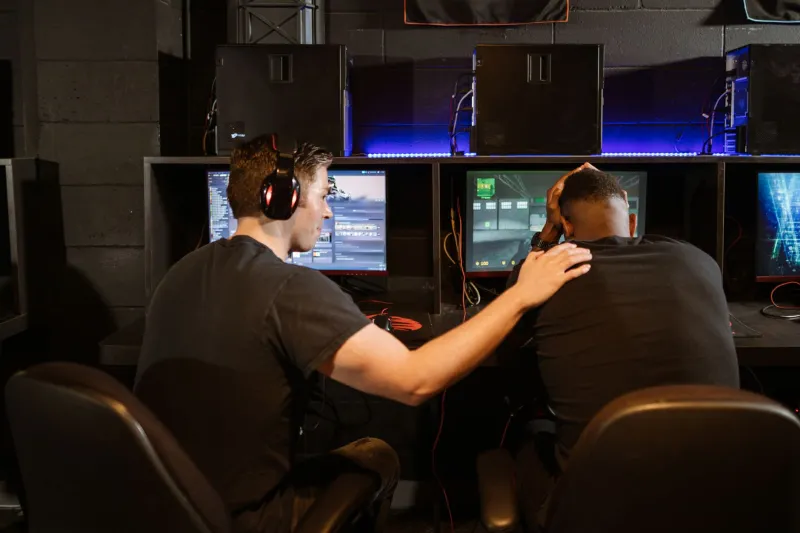
Somewhere out there, in the cold indifferent void of the cosmos, there exists a force — ancient, bored, and deeply petty — that exists solely to wait for a gamer to start broadcasting before unleashing absolute mayhem. Scientists call it Murphy's Law. Streamers call it Tuesday. We at Mad Beavers call it beautiful.
Because here's the thing: a catastrophic gaming moment that happens in private is just a bad day. That same catastrophic moment witnessed live by 4,000 people transforms into immortal content, a highlight reel legend, and occasionally a genuine mental breakdown that somehow gets clipped, remixed, and set to a lo-fi beat within 48 hours. The streaming era didn't just change how we play games. It gave Murphy's Law a live studio audience.
The Hardware Apocalypse Awaits Your Most Clutch Moment
Ask any serious streamer about their worst nightmare and they'll describe some variation of the same horror movie: it's a tournament run, a world-record attempt, or the final boss of a 90-hour RPG they've been grinding for three weeks. The chat is electric. Donations are rolling in. And then — nothing. Black screen. The PC, which has functioned perfectly for four unwitnessed years, has chosen this exact moment to file for early retirement.
This isn't a rare edge case. It's practically a rite of passage. There's something almost supernatural about how consumer electronics develop a sixth sense for maximum-inconvenience timing the moment a webcam points at them. Power supplies fail mid-raid. Monitors blink out during ranked matches. Keyboards — keyboards, the most passive pieces of hardware ever invented — have reportedly died mid-speedrun at the exact moment a world record was within reach.
The speedrunning community, bless their obsessive hearts, has documented enough hardware failures at critical junctures to fill a documentary. One runner, deep into what was shaping up to be a record-breaking Celeste run, watched his capture card simply quit — not crash, not freeze, just politely stop caring — with under two minutes left on the clock. The chat's collective scream was reportedly visible from space.
The House Always Wins (And It Will Make Noise About It)
Then there are the domestic disasters. The streaming setup is, by its nature, a window into someone's home. And homes are chaotic, living organisms full of family members, pets, delivery drivers, smoke alarms, and plumbing that has no concept of content scheduling.
Pets, obviously, are the reigning champions of stream interruption. Cats have walked across keyboards at moments so precisely catastrophic that animal behaviorists would need to study the footage. Dogs have barged into frames during intense PvP moments, toppling entire desk setups with the casual destructive energy of a small furry wrecking ball. One streamer's parrot famously learned to mimic the Windows shutdown sound with enough accuracy to cause a genuine panic during a live session.
But the truly legendary disasters involve the house itself staging a revolt. A streamer in the Pacific Northwest was mid-way through a calm, meditative Stardew Valley session when a pipe in the ceiling decided to express itself directly above the streaming PC. Another broadcaster, live to several hundred viewers, discovered that their kitchen was on fire not from any alarm but from a viewer typing "bro your house" in chat. The calm with which they paused the game, walked off camera, and returned two minutes later to say "we're fine, chat" achieved a kind of Zen that no amount of meditation could manufacture.
The Audience Effect: How Viewers Make Everything Worse (In the Best Way)
Here's the psychological twist that makes streaming disasters uniquely brutal: the audience doesn't just witness the chaos — they participate in it. Chat, that churning river of reactions and memes and inexplicable spam, has a measurable effect on streamer performance. The pressure of live eyes turns manageable situations into full-blown spirals.
Gamers who can clutch a 1v4 in ranked play with zero viewers have been documented completely falling apart the moment a crowd shows up. The brain, suddenly aware it's being observed, apparently decides this is a great time to forget basic motor skills. Button inputs get fumbled. Menus get misread. Simple puzzles that any reasonable human could solve in thirty seconds become five-minute ordeals while chat helpfully types "LULW" on repeat.
And then there's the donation notification timing. Every streamer who has ever received a loud, jarring donation alert at a tense in-game moment knows the specific flavor of suffering it delivers. Jump scares in horror games are one thing. A text-to-speech donation reading "HAPPY BIRTHDAY DUDE" at maximum volume during a stealth sequence is something that leaves marks.
The Ones Who Turned the Wreckage Into a Win
What separates the great streaming disaster stories from the merely sad ones is what happens after everything goes sideways. The streamers who've carved out genuine legacies aren't necessarily the ones with the cleanest setups or the most stable internet — they're the ones who, when the ceiling starts leaking or the PC starts smoking, look directly into the camera and commit to the bit.
There's a specific charisma that emerges from someone who has completely lost control of their situation but refuses to lose control of their entertainment value. The streamer who turns a three-hour technical failure into an improvised talk show. The one who, faced with a total game crash on a record run, immediately pivots to roasting themselves in real time before chat can do it first. These people aren't just gamers. They're performers who happened to get stress-tested live.
Murphy's Law, it turns out, is actually a talent scout. The streamers who survive their worst on-camera disasters tend to emerge with something better than a clean highlight reel — they get a reputation. A mythology. Clips that circulate for years because the reaction was just that good.
The Lesson Nobody Will Actually Learn
If there's wisdom buried in all this beautiful wreckage, it's probably that the 'Go Live' button is less a technical function and more a formal invitation to chaos. Every streamer knows this. None of them stop pressing it.
And honestly? Good. Because the alternative — a world where streaming is smooth, uneventful, and professionally predictable — sounds absolutely terrible. We don't watch streams hoping for perfection. We watch because the next disaster is always one bad pipe, one rogue pet, or one extremely poorly timed donation notification away.
The universe loves an audience. And it's not above performing for one.
Mad Beavers salutes every streamer who has ever looked into a webcam, watched their entire setup fail in real time, and thought: yeah, we can work with this.