Reality Has No Checkpoint: The Funniest Ways Gamers Tried to Cheat Real Life
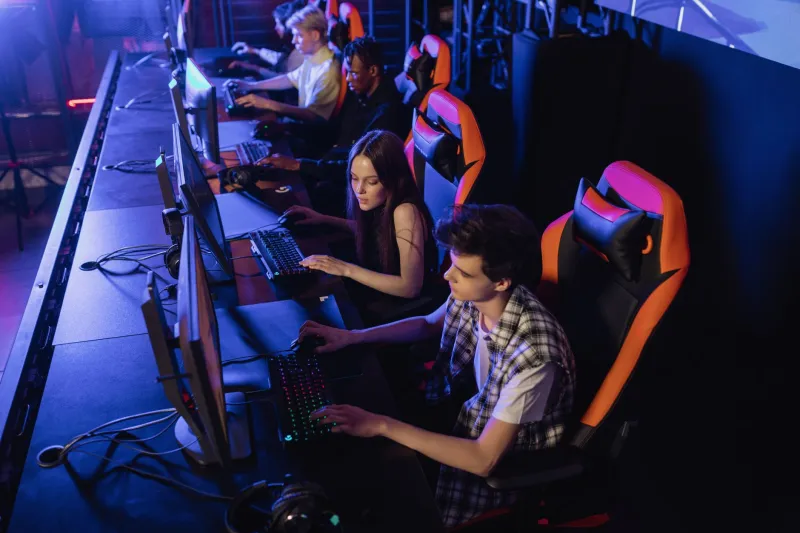
Somewhere between your ten-thousandth hour of gameplay and your first real adult responsibility, something goes quietly, magnificently wrong inside the gamer brain. The wiring crosses. The firmware corrupts. And suddenly you're standing in a Walgreens at 11 p.m., genuinely annoyed that you can't fast-travel home.
Welcome to the Great Disconnect—that beautiful, catastrophic gap between video game logic and the physics of actual reality. We've collected the most gloriously misguided examples of gamers exporting their digital instincts into the offline world, and honestly? We're not laughing at you. We're laughing with you. Mostly because we've done it too.
The Quicksave Instinct: Life's Missing F5 Key
Ask any veteran gamer what their first instinct is before a high-stakes moment—a job interview, a first date, a difficult conversation with a parent—and at least half of them will admit, with varying degrees of shame, that their brain screamed quicksave.
One Reddit user (username: SpaghettiWarden) described sitting in their car outside a job interview, hands on the wheel, genuinely feeling like something was missing before they walked in. It took them a full minute to realize they were waiting for a save confirmation screen that was never coming. They got the job, by the way. But they also spent the whole interview mentally calculating whether they could reload if it went badly.
This isn't a quirk. This is a full-on neurological adaptation. Games have trained an entire generation to treat high-risk moments as checkpointable—to believe that consequences are reversible if you just prepared correctly beforehand. Real life, as it turns out, has a permadeath mode and absolutely zero warning.
Dialogue Trees Don't Exist, But Tell That to Our Brains
If quicksaving is the most relatable offense, running real conversations like RPG dialogue trees is the most chaotic one.
Games like Mass Effect, Baldur's Gate, and basically every BioWare title ever made have conditioned players to expect that human interaction comes in neat, labeled options. [Persuade]. [Intimidate]. [Ask About the Artifact]. You pick your response, the NPC reacts, and the conversation advances in a predictable, manageable way.
Real people? Not so much.
A friend of ours—we'll call her Tara, because that's her name and she told us to use it—once admitted that during arguments with her college roommate, she would mentally scroll through imaginary response options before speaking. "I'd think, okay, Option A is aggressive and probably ends the friendship, Option B is diplomatic but weak, Option C is the joke response that might defuse things," she said. "The problem is real conversations don't wait for you to pick. My roommate thought I was having a stroke."
The deeper tragedy here is that Tara's instinct wasn't wrong, exactly. It's actually a pretty solid framework for conflict resolution. It's just that the three-second loading pause while your brain renders the options reads as deeply unsettling to anyone who hasn't played 400 hours of Dragon Age.
The Inventory Problem: Why Gamers Are Terrible at Packing
Gaming has given us two completely incompatible relationships with carrying stuff.
On one end, you have the hoarders—players raised on survival games and JRPGs who cannot, under any circumstances, throw anything away. You might need that later. That half-broken item? Could be a crafting component. That piece of junk with no apparent value? Definitely sells for something somewhere. These people move into apartments with seventeen boxes of "just in case" items and a pantry that looks like a prepper bunker.
On the other end, you have the min-maxers—players optimized by action games to carry only what's essential for the current mission. These are the people who show up to a week-long vacation with a single carry-on and no charger because "I'll figure it out when I get there." They've mentally calculated their encumbrance limit and they are not going over it.
Both groups are disasters at IKEA. For entirely different reasons.
Respawning: The Lie That Keeps on Giving
Here's the dark one, and we're going to address it with the gentleness it deserves.
For players who grew up with respawning as a fundamental mechanic—where death is an inconvenience, not an ending—the concept of permanent, irreversible loss can hit differently in real life. Not just with people, but with opportunities, relationships, and moments.
Multiple gaming communities have documented the weird grief that comes from missing something in real life and feeling that phantom instinct to reload. The job you didn't apply for. The conversation you avoided. The trip you kept putting off. There's a specific flavor of regret that gamers describe as feeling like a "missed checkpoint"—the sense that somewhere, a better version of events exists if you could just access it.
Of course, you can't. But the instinct to look for the reload option is real, and it says something kind of profound about how deeply games have reshaped our relationship with consequence and second chances. Maybe that's not entirely a bad thing. Maybe wanting a do-over means you actually care. You're just going to have to earn it the hard way, without a menu.
Grinding in Real Life: The One That Actually Works
Here's the twist ending nobody asked for: some gaming logic does transfer.
The concept of grinding—doing repetitive, incremental work to level up a skill—maps almost perfectly onto how expertise actually develops in the real world. Deliberate practice. Consistent repetition. Slow, boring, unglamorous progress toward a goal. Gamers, it turns out, have a higher tolerance for this than average people because they've been voluntarily doing it for entertainment since childhood.
Want to learn guitar? That's a grind. Learning to code? Total grind. Building a business, getting fit, mastering a language? All grinds. And gamers—the ones who farmed the same dungeon for three weeks to get a specific drop—are weirdly equipped for this.
So maybe the Great Disconnect isn't entirely a disaster. Maybe it's more of an uneven trade. You lose the ability to fast-travel to Trader Joe's, but you gain the psychological stamina to level up at something real.
You just have to remember that the respawn button doesn't exist.
Got your own story of gaming logic colliding spectacularly with reality? Drop it in the comments. The weirder, the better. This is Mad Beavers. We've got time.